
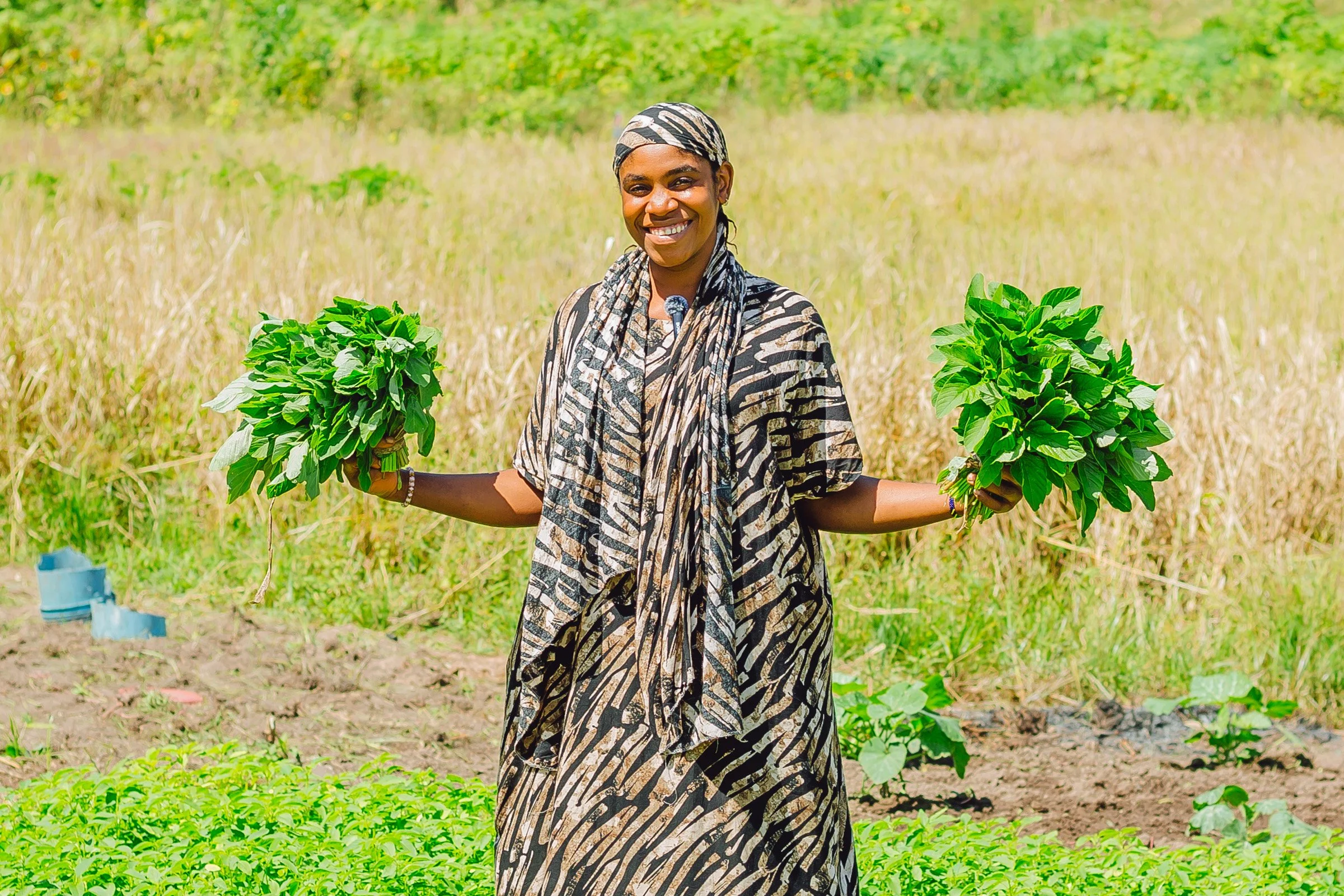
Fatma Masudi Mpili, vegetable and poultry farmer.
Rising global temperatures regularly feature in the headlines – but often little attention is paid to climate adaptation. Farmers across the world are being forced to reckon with unreliable weather patterns and harsher extreme events affecting their crops and threatening their livelihoods.
Thanks to your support of our Regenerators Appeal, where eligible donations were matched pound for pound by the UK government, three years ago, we began collaborating with communities of farmers in the Pwani region of Tanzania, who are particularly vulnerable to climate change. Now, we have the opportunity to reflect upon the fantastic changes people there have made in how they farm and manage their land.
We worked with 2,548 farmers (1,313 women and 1,235 men) in the Rufiji and Kisaware districts of Tanzania. Their goal was to increase the productivity of their farms, growing a range of crops including sunflowers, poultry and vegetables, as well as to achieve better access to markets to sell them. Previously, most farmers relied on selling their produce directly on the farm, or in their village. Many farmers have now expanded the reach of their sales to urban and export markets, for example in Dar es Salaam, in order to sell at higher prices. Farmers joined together to form 287 small producer organisations, which began attending local and regional trade fairs to access new opportunities.
Over the course of the project the average income per farmer increased from £195 to £240. Higher incomes help make farmers more resilient to climate change, able to survive difficult years where extreme weather could wipe out a harvest for a particular crop. This makes diversification vital on a farm, which is why in those three years, farmers have expanded into new value chains. This includes 769 women who began new ventures, for example in beekeeping for honey production. The average farmer has seen their income increase by 23% - helping them support their families and enabling their communities to prosper.
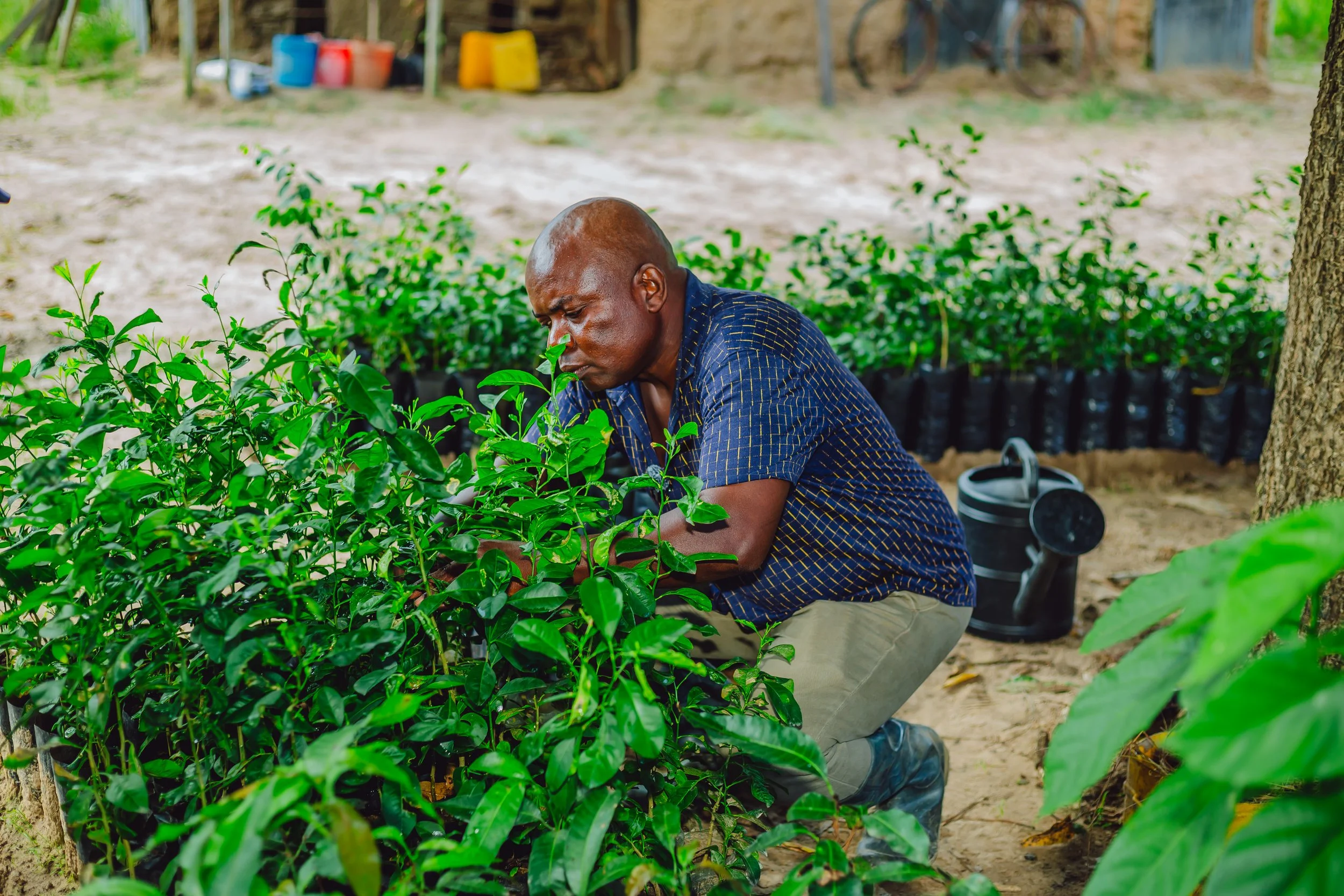
Salehe Shabani Kihiki tending fruit tree saplings
As well as growing their incomes, farmers invested in their local ecosystem, by planting trees to reforest the area. In total they restored 30 hectares of farmland to forest. Each farmer who got involved planted an average of 328 trees, with 301 surviving. These restored Miombo woodlands and mangroves sequester carbon, stabilise the soil and protect the watershed, helping reduce future flooding threats.
Local Village Environmental Committees (VECs) also enacted by-laws to restrict logging and charcoal production, previously significant threats to the forest. Although 30 hectares is a small portion of the land which has been degraded in recent years, this restoration provides hope for the future – local communities have rallied in support. VEC-led patrols have already begun monitoring hotspots, enforcing rules, and promoting sustainable practices – with the potential to restore more and more precious ecosystems in the future.
Tree planting was just one of several practices farmers implemented to improve climate resilience. By the end of the project, 85% of farmers had access to SMS messaging services with localised weather forecasts, and a significant number had begun using at least one sustainable technology, including solar driers, solar irrigation, and modern beehives. Farmers expanded their knowledge of environmental conservation techniques too, and villages introduced Climate Change Adaption plans to bolster their communities’ resilience in the years to come.
With thanks to the UK government through the UK Aid Match Fund