
A core pillar of the mid-20th century green revolution was widespread adoption of nitrogen fertiliser. Ever since, chemical fertilisers have blanketed farmers’ fields before they plant a new crop, significantly increasing yields. The benefits for food production have been undeniable – but so have the negative consequences.
In our globalised economy, chemical fertiliser production is unevenly distributed. After Russia, Egypt and Saudi Arabia, Iran is the fourth-largest global exporter of urea, which is the most widely used nitrogen fertiliser.
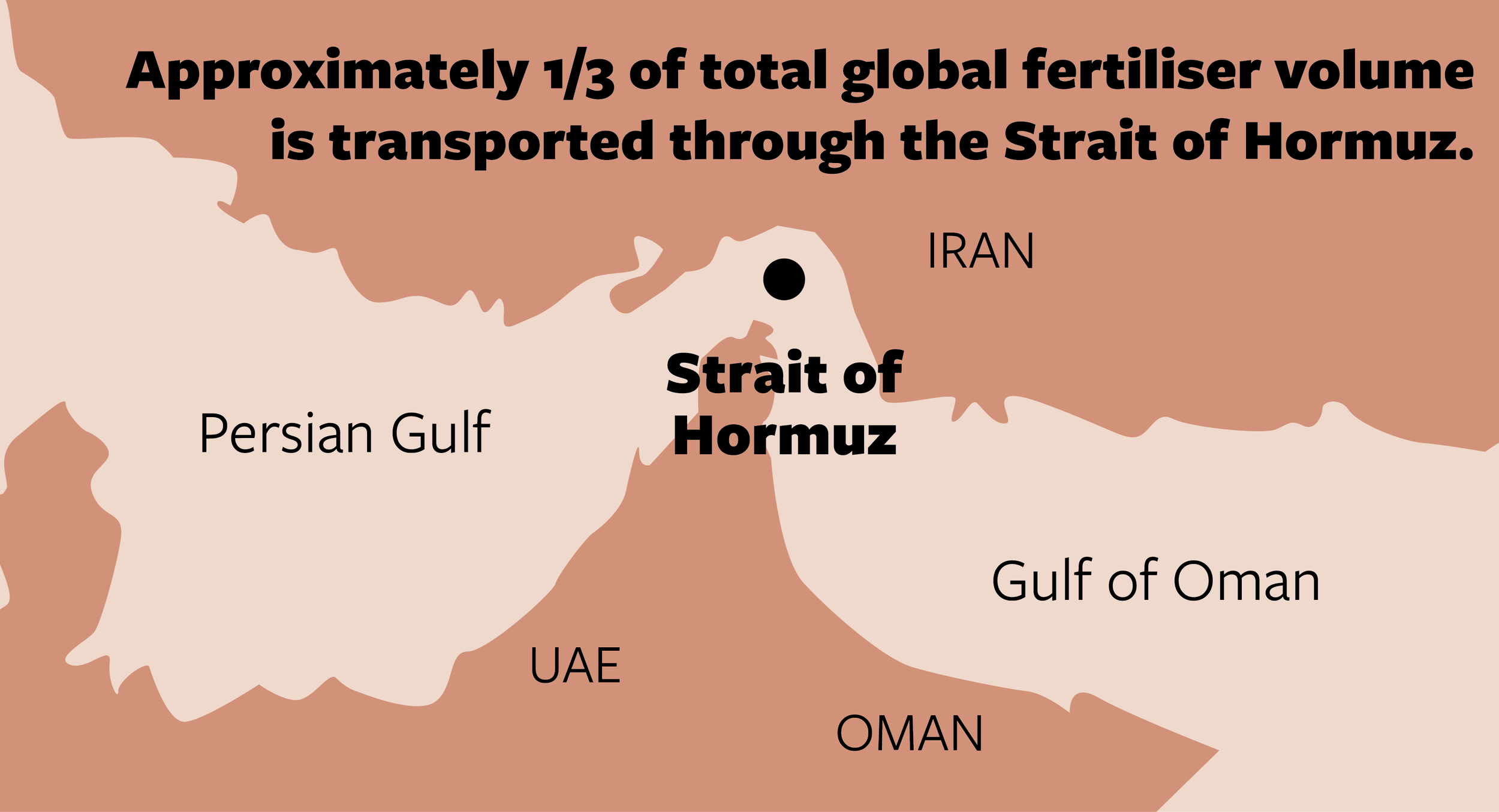
The Strait of Hormuz has largely been blocked since February 2026 – dramatically increasing the price of fertiliser. These fertilisers can multiply farmers’ yields – but can also make them painfully dependent on geopolitical cooperation in an increasingly unstable world. Countries in Sub-Saharan Africa and South Asia are particularly dependent on Gulf-origin fertiliser.
Our global dependence on chemical fertilisers is unsustainable. In a world where economic and environmental crises are the ‘new normal’, it’s no longer possible to allow the food system to continue addiction to fertilisers and pesticides.
However, switching to agro-ecologically sound practices, such as using locally developed organic fertilisers, is not simply a question of farmers’ choice. Currently, governments and NGOs around the world subsidise synthetic fertilisers and pesticides for farmers.
Farmers need financial and technical support to move away from these inputs and farm more regeneratively, which will ultimately benefit the environment and reduce their vulnerability to geopolitical shocks. We’re working with farmers to help them produce organic fertiliser, working together in community groups and running small businesses. Many of these farmers are also implementing new techniques to manage pests and increase yields without pesticides – building local resilience in the face of a changing climate and geopolitical shocks.