As the WTO gathers in Cameroon, there is pessimism in the air. But a fairer future is possible.
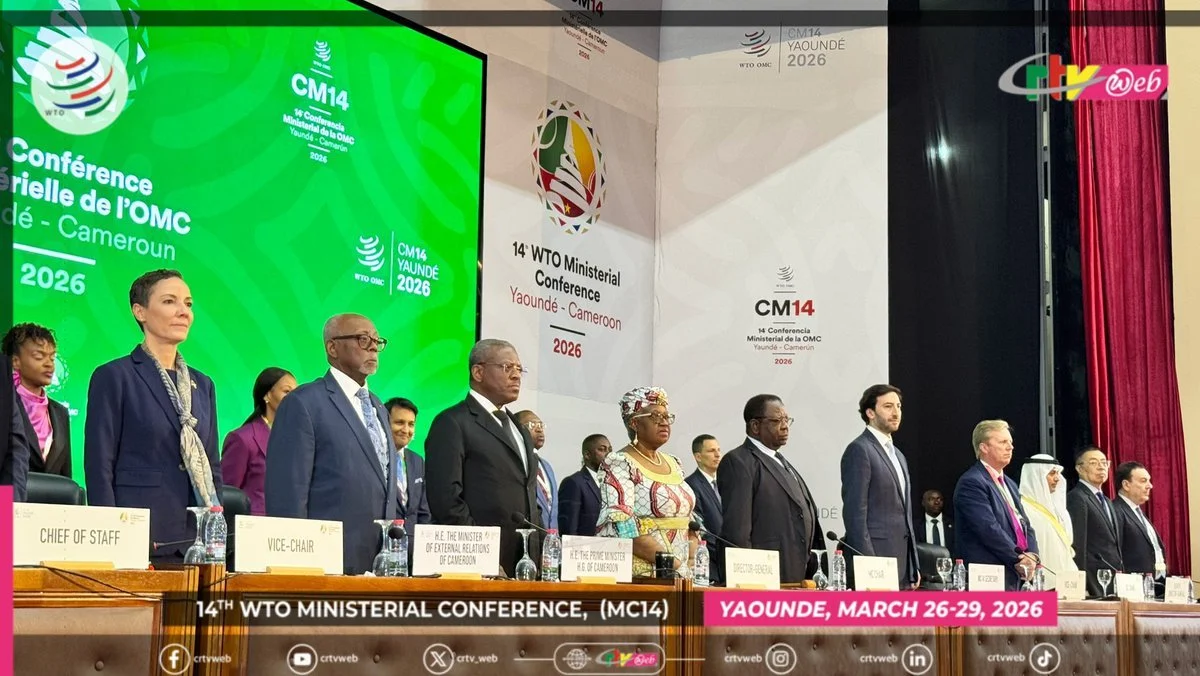
The World Trade Organization is the only forum where nearly all countries meet to set and update global trade rules. When it was established in 1994, governments committed not only to expanding trade but to doing so in ways that would raise living standards, ensure full employment, protect the environment and support sustainable development. These aims reflected a moment of high confidence in globalisation and in the belief that expanding trade would benefit everyone.
It quickly became clear that the system was not delivering on those promises. By 1999, many countries in the Global South argued that the rules had been shaped to favour richer nations while restricting their own development options. Protests in Seattle, alongside a walkout by several Global South governments, halted the WTO ministerial meeting that year and exposed deep fractures in the institution.
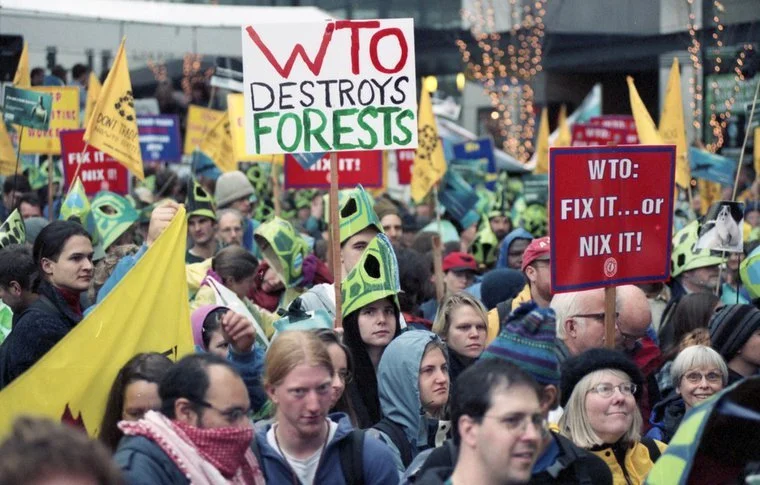
The 1999 ‘Battle of Seattle’ protests drew widespread attention to unfairness in the WTO
In response, governments launched the Doha Development Round in 2001, promising to address long-standing inequities in areas such as agriculture. While some export subsidy reforms followed, progress was limited and uneven. Talks collapsed in 2008 and were formally sidelined in 2015. The broader consequences were stark. In 2003, Korean farmer Lee Kyoung Hae took his own life during WTO protests, highlighting the desperation of farming communities confronted with unfair trade rules.
More than thirty years on, the global trading system has evolved well beyond the exchange of goods. The WTO has helped to create the framework for trading services, intellectual property and government procurement, and supported the rise of global supply chains.
Today, that system is under strain. Countries that once championed it, including the US, are increasingly acting outside its rules. Inequality, climate breakdown and other global crises have further eroded public trust in globalisation.
The WTO has not delivered major negotiated outcomes for nearly two decades, and its dispute settlement system has been weakened by the US refusal to appoint appellate body members. Many of the core concerns raised by the Global South remain unresolved.
As ministers prepare to meet in Yaoundé for the WTO's 14th Ministerial Conference, expectations remain low. Several proposals being advanced by Global North countries risk reducing the policy space of the Global South even further.
The US and its allies are challenging provisions designed to recognise structural inequalities between countries and are seeking broader leeway to break trade rules by invoking national security.
Richer nations also want to extend the moratorium on digital customs duties, which mainly benefits large multinational platforms such as Amazon and Google and deprives developing countries of valuable revenue.
Digital trade talks raise similar concerns. Many Global South governments argue that proposed rules would lock in the advantages of data-rich firms based in the Global North, while restricting domestic innovation and limiting access to technologies that are essential for climate adaptation and development. While climate issues are now discussed more openly at the WTO, new environmental measures introduced by wealthier countries could impose significant costs on economies that have contributed the least to the climate crisis.
Despite commitments under the Paris Agreement, the transfer of climate technology from rich countries to poor ones has been minimal.
As our colleagues at IBON International have put it:
“Together, these moves accelerate the shift from rules-based trade to power-based coercion”.
These dynamics point away from a system based on fair, mutually agreed rules and towards one shaped by geopolitical pressure. Technical reforms will not resolve the deeper structural issues. Any meaningful change must address historical imbalances, restore policy space and ensure that people most affected by trade decisions have a meaningful voice in shaping them.
Transform Trade stands with civil society partners across the world in calling for a fairer alternative. Countries in the Global South must be able to shape their own development, industrial and climate priorities.
Trade rules should be aligned with social, economic and climate justice, and the global dispute settlement system must be restored so powerful countries cannot simply ignore the rules. Special and differential treatment for developing countries must be protected.
Environmental measures should support, not hinder, exports from the Global South, and governments must have access to the finance, training and technologies needed to meet green standards.
Digital trade rules must allow countries to regulate data, support domestic innovation and require technology transfer.
A fair trading system must also defend food security and the rights of smallholder farmers, Indigenous Peoples and communities whose livelihoods depend on sustainable agriculture.
Countries should be able to maintain public stockholding for food security and support their farmers through subsidies that strengthen resilience and protect local markets, while large and trade-distorting subsidies in industrial agriculture must be phased out.
As governments gather in Yaoundé, the direction of the global trading system is at stake. A fairer future is possible, but only if trade rules are reshaped to serve people and the planet, not just those already in the strongest position.