Briefing: Inclusive data governance for smallholders in the digital age
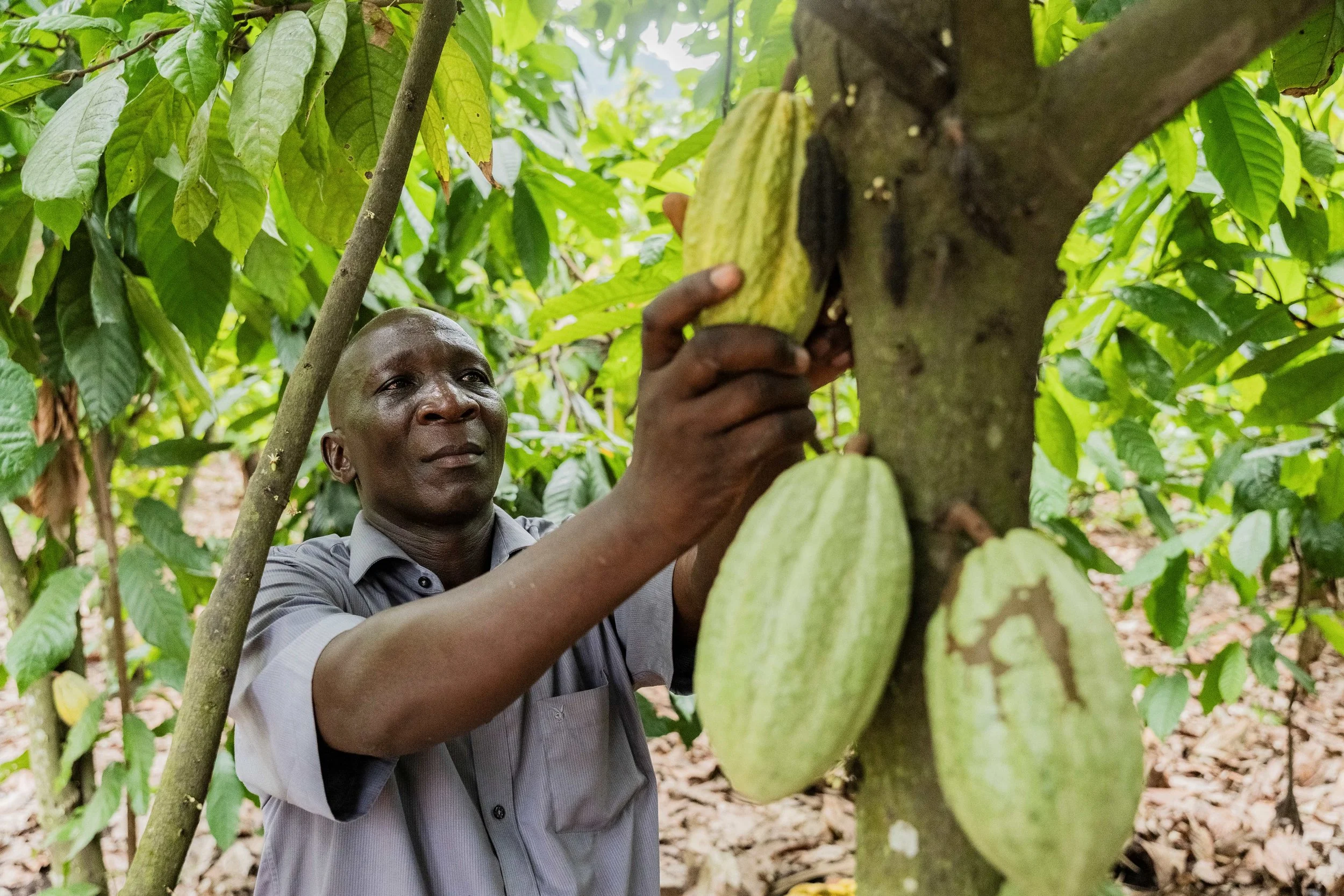
Aswile A Mangama walks on his cocoa farm in Mbeya Region, Tanzania.
Photo By: Michael Goima
Transform Trade and SEATINI Uganda have published a joint briefing ‘Putting Farmers First: inclusive data governance for smallholder farmers in the digital age’.
The briefing outlines how new global forest & trade regulations, including the European Union Deforestation Regulation and the UK Forest Risk Commodities scheme, require a massive increase in farm data collection to prove products are not linked to deforestation. Although legal responsibility lies with businesses in the UK and EU, the heavy technical and financial burden of collecting this data is being pushed onto smallholder farmers. Without proper support, these rules threaten to shut small producers out of vital global markets.
Key challenges facing smallholder farmers
Privacy and land risks: farm- level data collection exposes farmers to privacy breaches, potential land rights disputes, and tax liabilities without clear safeguards or meaningful consent.
Loss of data control: Buyers can capture and lock away farm data, making farmers dependent on a single buyer for market access while receiving no financial compensation for their information.
Wasted resources and duplication: Companies often use closed data systems that fail to share information, leading to the same land plots being mapped multiple times by competing buyers at a great waste of resources.
High financial and technical costs: Expensive software licenses, digital tools, and administrative staff of data collection can be prohibitive for smallholder producers. Estimates show that data systems can cost up to thirteen thousand pounds for a single farmer cooperative, crushing already thin profit margins.
Risk of market exclusion: Importers may choose to buy only from large corporate farms simply because smaller producers lack the digital records required to prove compliance.
Documentation gaps: Proving legal land use requires official permits and titles that are often undocumented, expensive, or legally inaccessible for farmers operating under customary tenure.
Pathways to an inclusive future
To ensure deforestation rules do not harm the very people who produce our food, policy makers and supply chain businesses must shift toward farmer centred solutions:
Farmer ownership: Give producers full ownership of their data and digital records so they can freely leverage their data in ways that is beneficial to them, while having control over who can and cannot access their data.
Shared digital infrastructure: Replace closed corporate silos with open national data hubs that map plots once, greatly reducing administrative burdens and preventing duplicate work.
Fair financial support: Ensure that data costs are shared across the entire supply chain rather than falling on farmers, using tools like cooperative management fees funded by UK and EU businesses.
Tailored protections and flexibility: Enact agricultural data privacy laws, grant reasonable transition periods, and allow alternative documentation to protect vulnerable producers from immediate market exclusion.