
The US and Iran war is having consequences far beyond the region. Rising fuel and fertiliser prices are creating a dire situation for many farmers in the Global South. The conflict has severely disrupted oil and gas shipments through the Strait of Hormuz. Crude oil has recently risen above $100 a barrel, while diesel prices have reached record highs.
For farmers across the world, expensive fuel means more than higher bills. Diesel is essential for tractors, irrigation pumps, running harvesting machinery and transporting crops to markets. When fuel costs rise, almost every stage of food production and farming becomes more expensive. These costs are particularly difficult for smallholders in Global South countries, who often have limited access to credit and don’t have the ability to increase their prices and pass on new costs further down the supply chain.
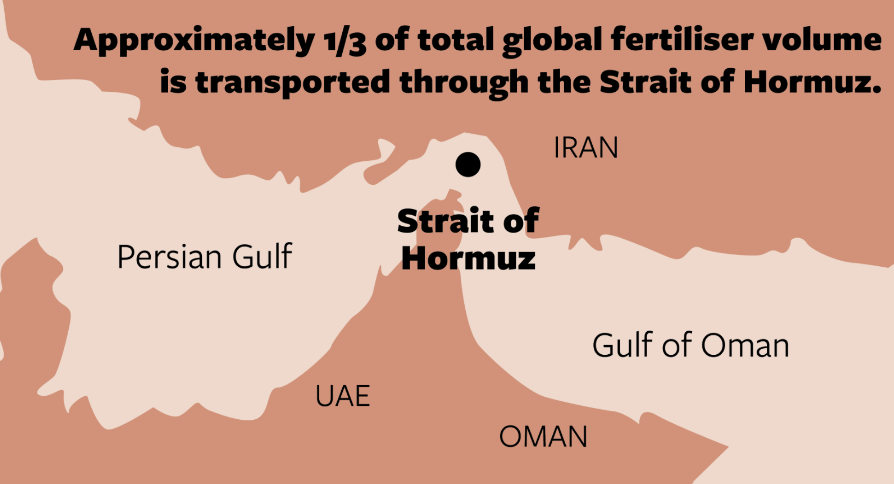
The war is also driving up fertiliser costs. The Gulf is a major source of urea, ammonia and sulphur, all of which are used in fertilisers, while natural gas, whose price has also been affected by the conflict, is a crucial input in nitrogen fertiliser production. Whilst reliance on chemical fertilisers comes with its own challenges, many farmers, especially in regions with unpredictable climates, depend on them. Disruption to shipping through the Strait of Hormuz has reduced global supplies just as farmers need fertiliser for planting.
This creates a vicious cycle. Farmers facing unaffordable fertiliser may apply less, risking lower yields. Those who continue buying face higher production costs and greater debt. Meanwhile, higher transport and input costs feed into their own food prices, placing additional pressure on households who have already spent a large share of their income on basic nessecities.
This is especially unfair because many farmers in Africa and Asia have no control or influence over either global energy supplies or the geopolitical decisions driving the conflict. Farmers are paying for a crisis they did not create. The result is not simply more expensive farming costs, but a threat to food security and efforts to reduce poverty.

“People could not irrigate on time due to the lack of oil and could not apply fertiliser… because of this, agricultural production has decreased by a large margin”
Md. Yakub Ali
Targeted support can help farmers negotiate fairer prices, build resilience and reduce reliance on costly imported inputs. For example, training in production of locally made organic composts can restore depleted soils and reduce dependence on imported fertilisers. By organising collectively, farmer groups can also raise their voices when it comes to shaping policies and legislation that affect their ability to earn a decent living, and negotiate fairer prices for their crops.
This is why Transform Trade has launched the ‘If we wait, it’s too late’ appeal this September. Rather than waiting until our conventional Christmas fundraising season, we want to get support into the hands of farmers as soon as we can.