
India is the second largest tea producing nation in the world, and more than 80% of total production comes from the states of West Bengal and Assam.
In West Bengal and Assam, tea is grown both by traditional large tea estates, and increasingly by smallholder farmers. Over the past year, we’ve been working with these smallholder tea growers, introducing them to Good Agricultural Practices for tea cultivation, and training them in climate resilient farming techniques.
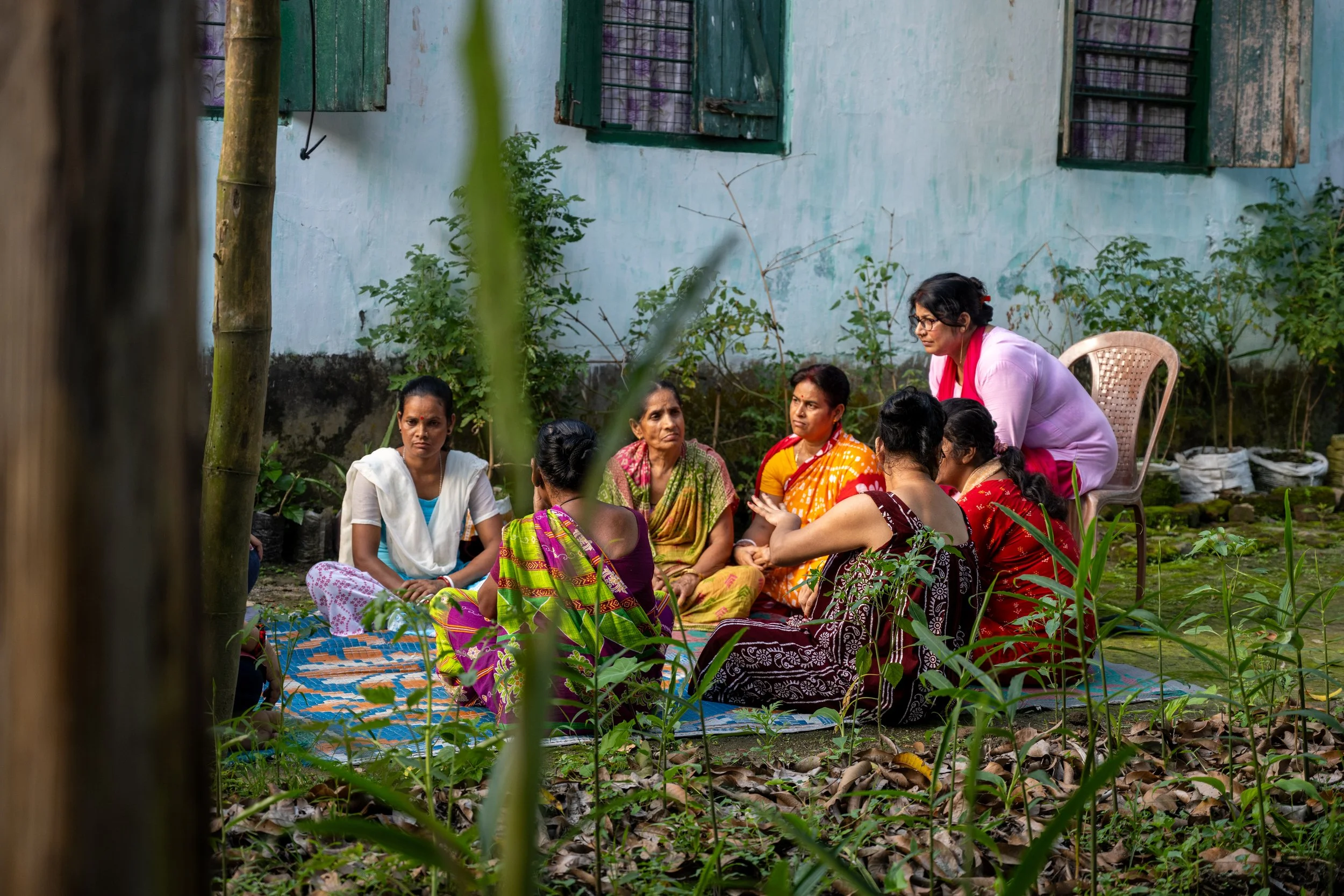
Tea workers meet together in Assam, India. Photos: Transform Trade/Ajaya Behera
Simultaneously, we’re supporting tea workers, who pick leaves on tea estates, to develop other skillsets and businesses, so they are able to increase their incomes beyond the wages paid by tea estates.
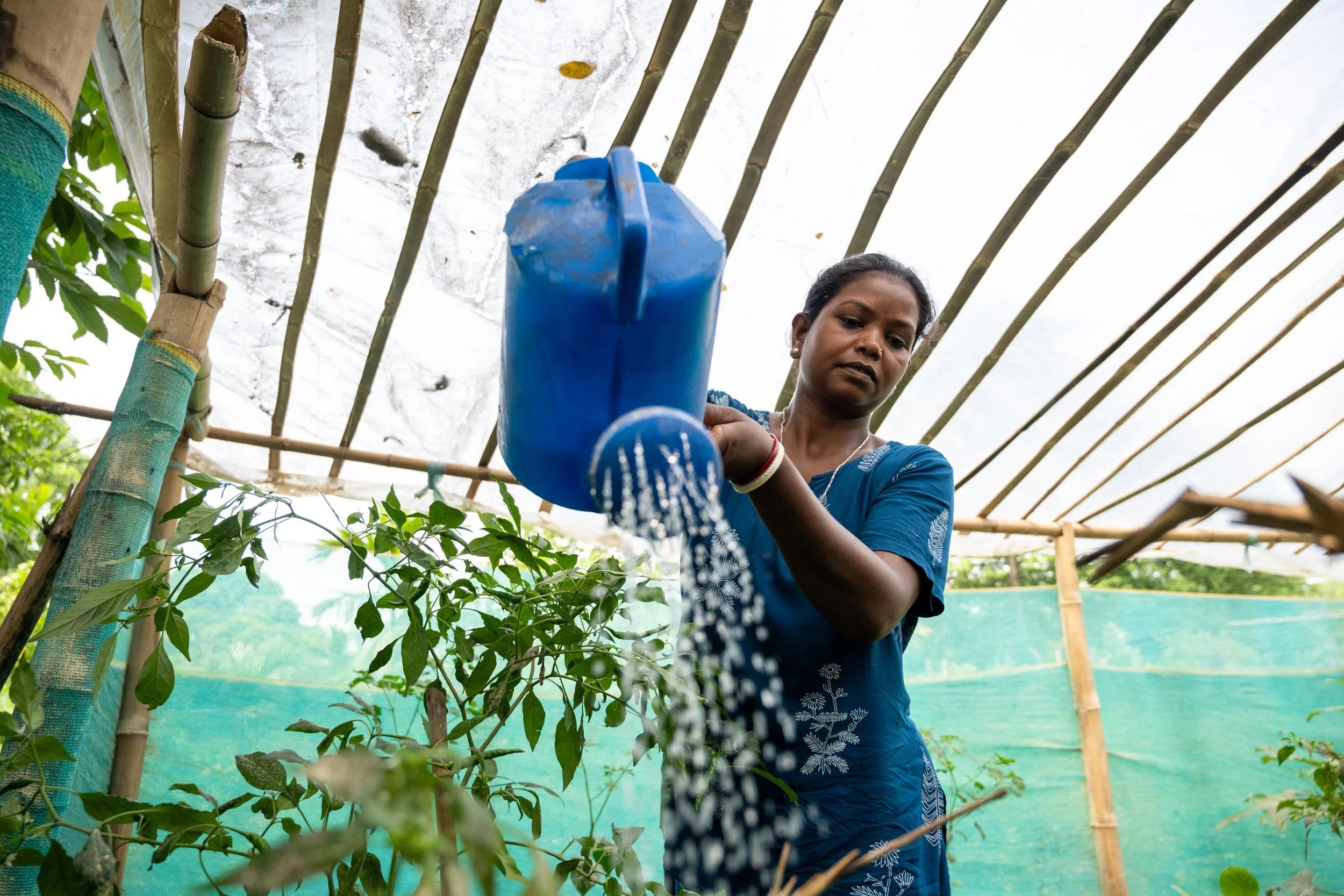
Bina Oroan, tea worker and farmer, West Bengal
“Through the self-help group and Transform Trade’s support, we received money to start the greenhouse. We also received training in mushroom cultivation, vermicomposting, jam and jelly making with apples, mangoes, and grapes.”
Here are just a few of the new trainings and practices undertaken in the last year by tea workers and tea farmers:
Training on solar energy systems
Electricity can be unreliable and unaffordable for tea growing communities. Power produced by solar can be an accessible energy source in rural areas, and last autumn, nine candidates from two tea-growing communities began to train as Solar-PV technicians.
Azolla production
In recent months, 43 self-help groups of tea workers have begun producing azolla – an aquatic fern which proliferates quickly – to provide a sustainable source of livestock feed. Producing azolla reduces feed costs for farmers and improves the nutrition of livestock.
Locally-produced fertiliser
32 self-help groups have scaled up production of homemade fertilisers. These organic fertilisers are produced using fermentation using local ingredients and garden waste. By reducing farmers’ need for commercial chemical fertilisers, they both protect soil health and reduce costs.
Mushroom cultivation
In early 2026, self-help group members attended a 10-day residential mushroom cultivation training program. They will act as Master Trainers, disseminating their knowledge so more farmers can diversify into mushroom production.
Hand crafted tea
A group of small scale tea growers in the Karbi Anglong district, have begun producing premium artisanal green tea. These women entrepreneurs are hand processing the tea, reviving traditional techniques, and enabling farmers to charge higher prices for their leaves.
As the climate crisis continues to change weather patterns and growing seasons, these practical, locally led solutions are helping tea-growing communities build resilience, protect their livelihoods, and look to the future with greater confidence. We’re proud to work alongside tea workers and smallholder farmers as they adapt and innovate to protect their communities and grow brighter futures.
To learn more about Transform Trade’s work across the world over the last year, you can read our annual report ‘The difference you made’ here.