
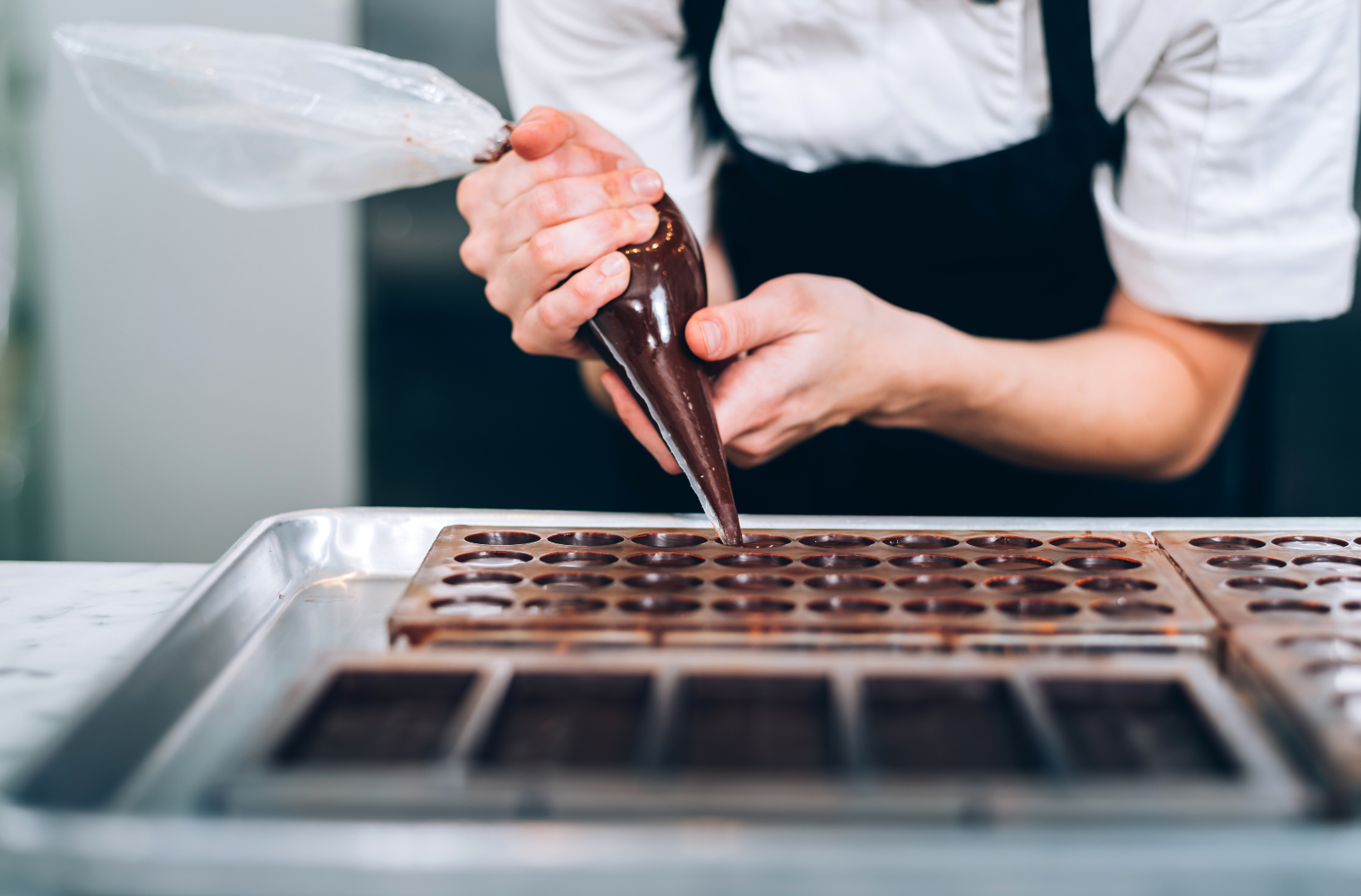
We all know this image is an illusion. Almost all chocolate is mass produced in a factory; it’s part of an industry worth hundreds of billions of pounds.
But in one way, your chocolate bar is hand crafted. Just not by a chef.
Cocoa is almost always harvested by hand. Between 40 and 50 million people, mostly small scale farmers growing cocoa pods in equatorial regions, rely on cocoa for their livelihoods.
The majority of these farmers live on less than 2 USD per day. And they have almost no control over how much they’re paid.
Transform Trade works with cocoa farmers in Tanzania, who sell though a farmer collective business called Mababu Cocoa. Aswile Anduilile Mwangama, a cocoa farmer, told us:
“Selling through middlemen there is no profit, before Mababu, I was selling cocoa from home for a very low price every week. Now I sell through Mababu I can sell several kilograms at once and earn more than what I was getting before.”
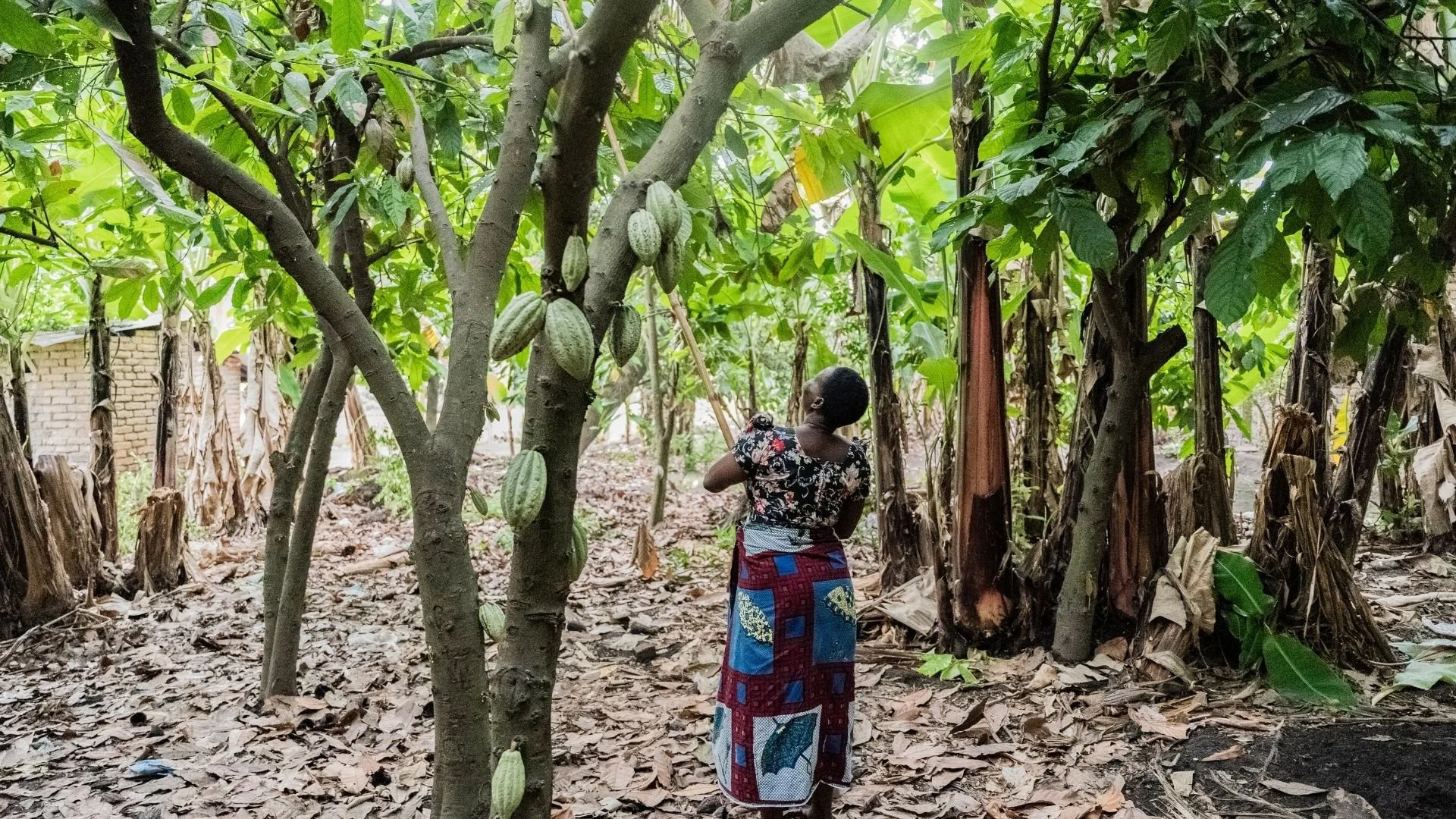
Enesti Jacobu Mwabusega, cocoa farmer, Tanzania.
Who does profit from chocolate?
Like most commodities, cocoa is bought and sold on futures markets, where traders bet on fluctuating prices – driving significant volatility. Cocoa farmers already have to contest with a changing climate, which threatens yields and encourages pests to proliferate – but speculation on cocoa markets can amplify this instability.
Farmers have to plan their crops years in advance – which means prices halving in just 18 months is devastating to their incomes.
The recent upswing in cocoa prices – which we’ve all be feeling in the supermarket – has hardly benefitted farmers at all.
Who really benefits in this system? The financial speculators.
Back in 2010, a UK hedge fund manager bought the legal rights to 7% of the worlds annual cocoa production – enough to make 5 billions bars of chocolate. He was given the name “Chocolate Finger”, a nod to the James Bond villain – because this hoarding had nothing to do with actually making chocolate. He wasn’t opening factories or inventing new products. He was speculating that the price of cocoa would go up soon, and it did. He made millions.
The cocoa industry is made up of millions of individual farmers acting as sellers, but extremely few buyers; the three largest cocoa companies alone process around two thirds of the world’s harvest.
Financial speculation costs farmers dearly – they’re left with no stability or guarantee of a fair income.
That’s why it’s vital we regulate supply chains, so businesses sourcing internationally are required to meet basic standards which protect small scale farmers.