
The most productive farmers in the world? All too often, they're the poorest.
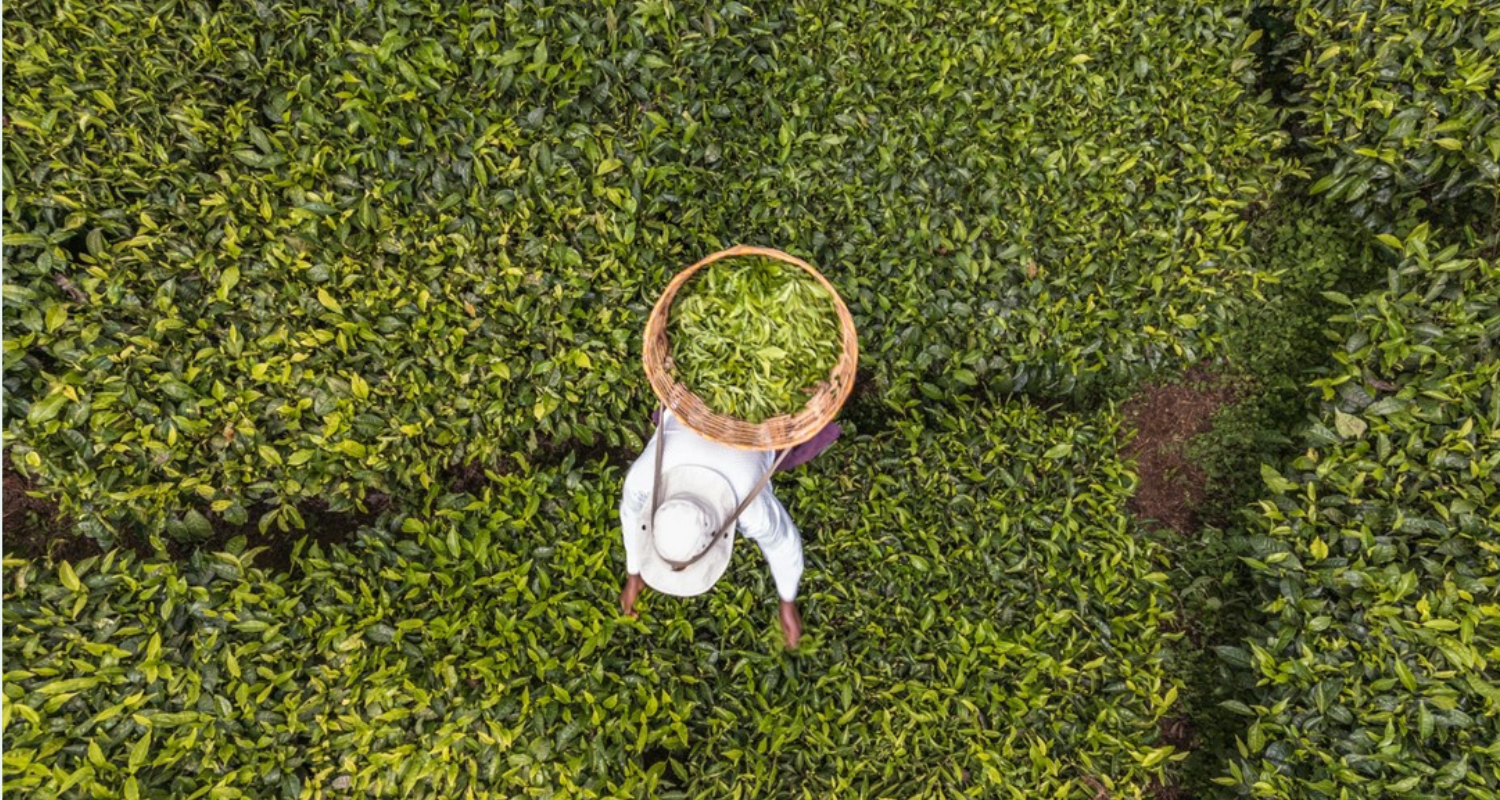
A tea grower in Nyeri, Kenya, plucks leaves from her farm. Photo credit: Transform Trade/Brian Otieno
We tend to assume that bigger farms are more efficient. Vast fields, heavy machinery, and industrialised systems give the impression of maximum productivity. But this isn’t the case.
In reality, some of the most productive farmers in the world are smallholders - people farming just a few hectares of land.
These farmers often produce more food per hectare than large-scale operations. By combining crops, making intensive use of limited land, and relying on the kind of knowledge you can only get from farming the same land for generations.
Yet despite this productivity, smallholder farmers are uniquely vulnerable.
This is the paradox at the heart of our global food system.
Small-scale farmers produce an estimated 35% of the world’s food using just 12% of agricultural land. In contrast, large farms control around 88% of land but produce 65% of food. These figures demolish the idea that small farms are inherently less productive – they show that the opposite is true.
So if productivity isn’t the issue, what is?
The answer lies in power.
Small farmers often operate in conditions where they have little control over prices and limited access to markets.
They typically sell their crops through intermediaries, meaning they capture only a small share of the final value. Many also lack access to proper finance, which forces them to use predatory moneylenders.
At the same time, they often bear the brunt of extreme weather and climate shocks.
In short, smallholders produce efficiently but earn very little.
If we want a fairer and more resilient food system, we need to look beyond aid and shift focus and power to the smallholders. This could transform livelihoods for millions of farmers that produce the things we enjoy every day and build confidence in a trade system that truly works for all.
Empowering small-scale producers such as these farmers is at the core of our Beyond Aid report, which has seven key points:
Ensure small-scale producers have agency and power
Address informality in supply chains
Acknowledge and act on women’s specific experiences
Regulate supply chains, promote business and human rights and make trade agreements work for small-scale producers
Put small-scale producers at the heart of a just climate transition
Acknowledge the important role of small-scale farmers in global food security
Ensure equitable access to finance and the digital economy for small-scale producers