
Why did the chicken cross the world?
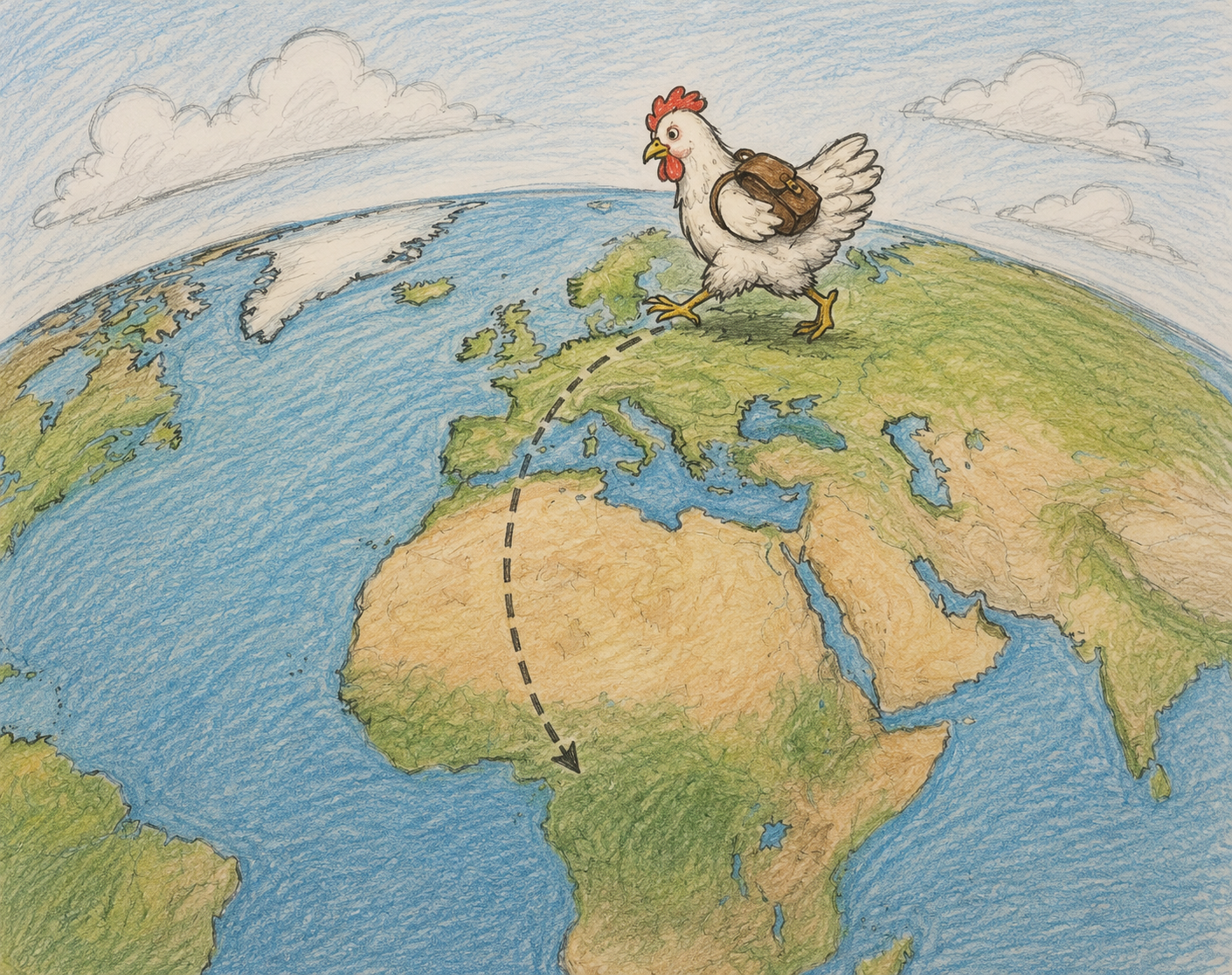
A chicken with a backpack steps across a map of the world
…and what does it have to do with trade?
It all comes down to one, somewhat unpalatable term: carcass balance.
Brits, and many other Europeans, prefer white poultry meat, leaving insufficient domestic demand for every other part of the chicken. In a bid to recoup lost value from the whole bird, wings, thighs, drumsticks and offal are exported.
In 2016, Europe exported 500,000 tonnes of poultry to Africa. On the surface, this sounds positive – food waste Is prevented, and this affordable food is made available in African markets.
But it can make an industry collapse… overnight.
“It has been accepted for over twenty-five years that international trade rules are biased towards the richest countries and businesses with the most lobbying power… It is less well recognised that small-scale producers are often the first businesses to cease operations, struggle to add value to products or diversify markets as a result.” Beyond Aid report, 2026.
Cameroon, which hosted the World Trade Organisation’s (WTO’s) 14th Ministerial conference in the capital Yaoundé this year, experienced this very catastrophe.
Following economic challenges in the early 1990s, Cameroon it’s trade rules as part of a broader program of market liberalisation, in line with WTO rules.
This caused a fourfold increase in poultry imports over the following five years. The result?
92% of poultry farmers left the sector
110,000 rural jobs were lost, every year, for 10 years
Ultimately - the industry collapsed.
Global trade rules can transfer shockwaves directly into rural livelihoods. Unless steps are taken to protect the interests of small farmers, predictably, they are the ones who suffer when indiscriminate trade liberalisation is implemented. Cameroon’s poultry industry is just one example.
That’s why our number one recommendation to legislators, policymakers and businesses is to ensure small-scale producers have agency and power.